Bucha School
As a result of the hostilities and occupation in Bucha, approximately 80% of educational institutions were destroyed or damaged. In response, with the initiative and support of Lithuanian entrepreneurs, we began designing a modern school with a kindergarten for 880 children. The project is funded by private investors from Lithuania, Ukraine, and other countries through a charitable foundation. Baust Architects has taken on the role of general designer, overseeing the entire process. The project also involves collaboration with Lithuanian companies 2L Architects and Noisyowls, as well as Ukrainian firms Martins Architects, Exsys, and others. Thanks to the combined efforts of this team, we have created a safe, functional, and aesthetically pleasing space for children and the community.
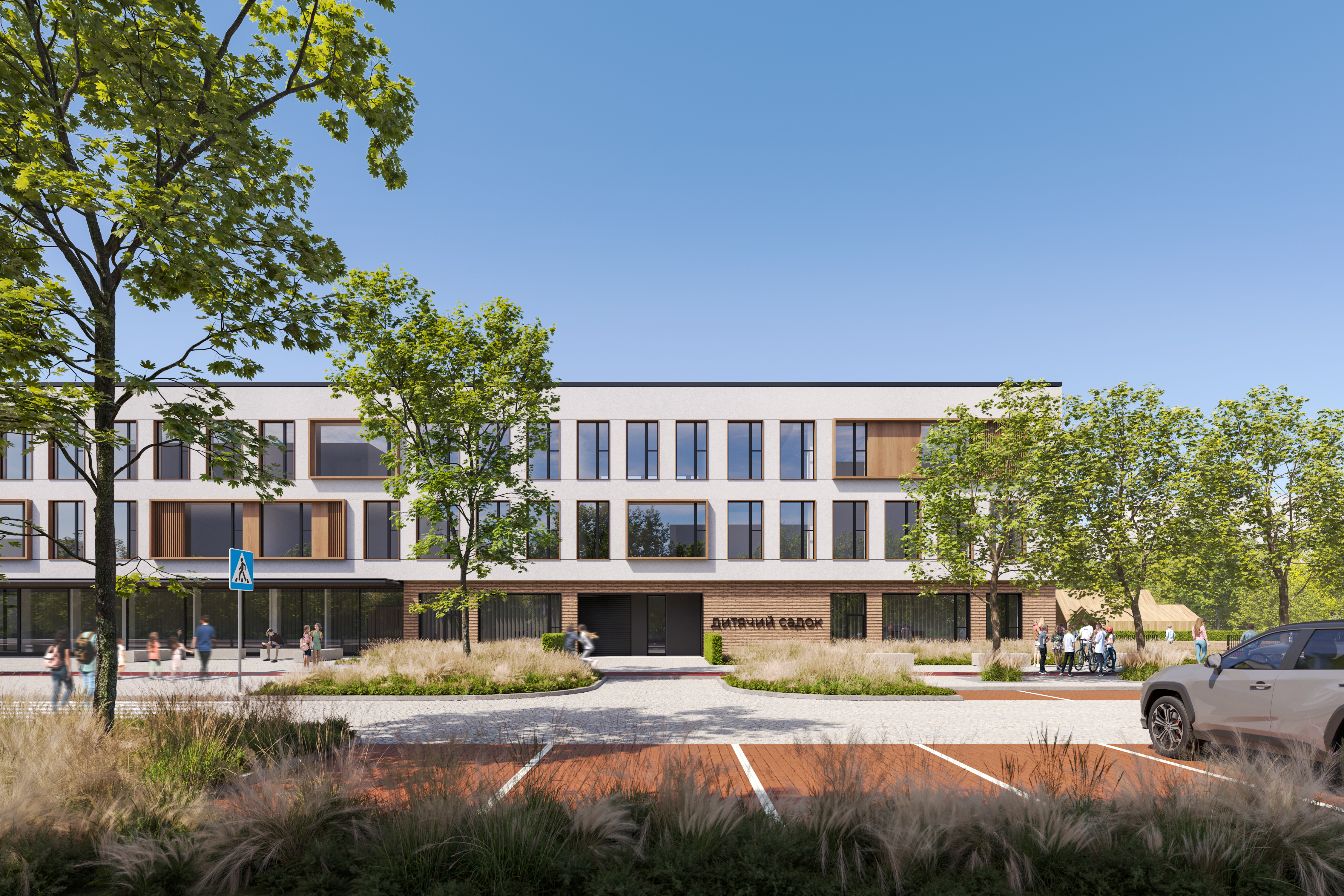
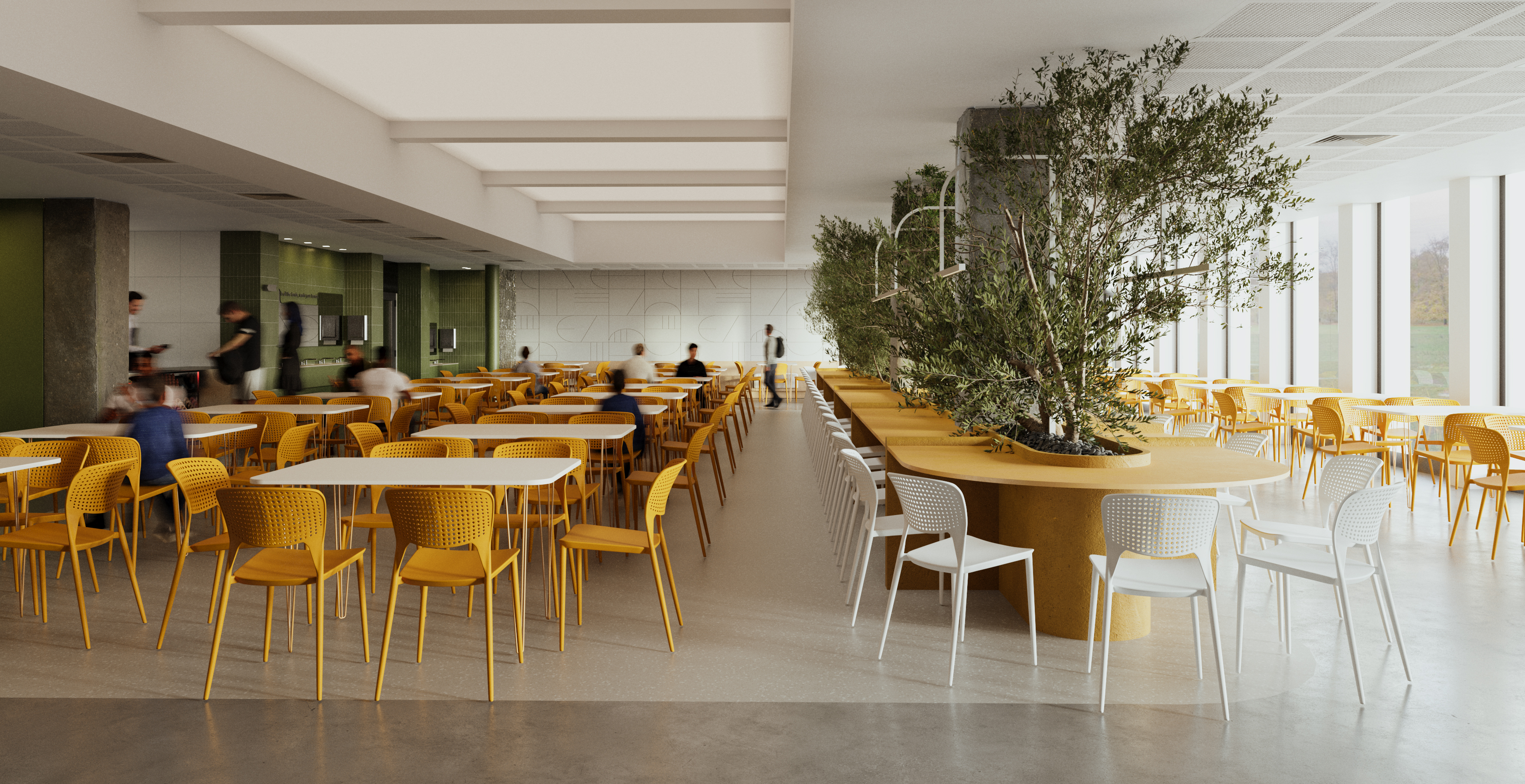
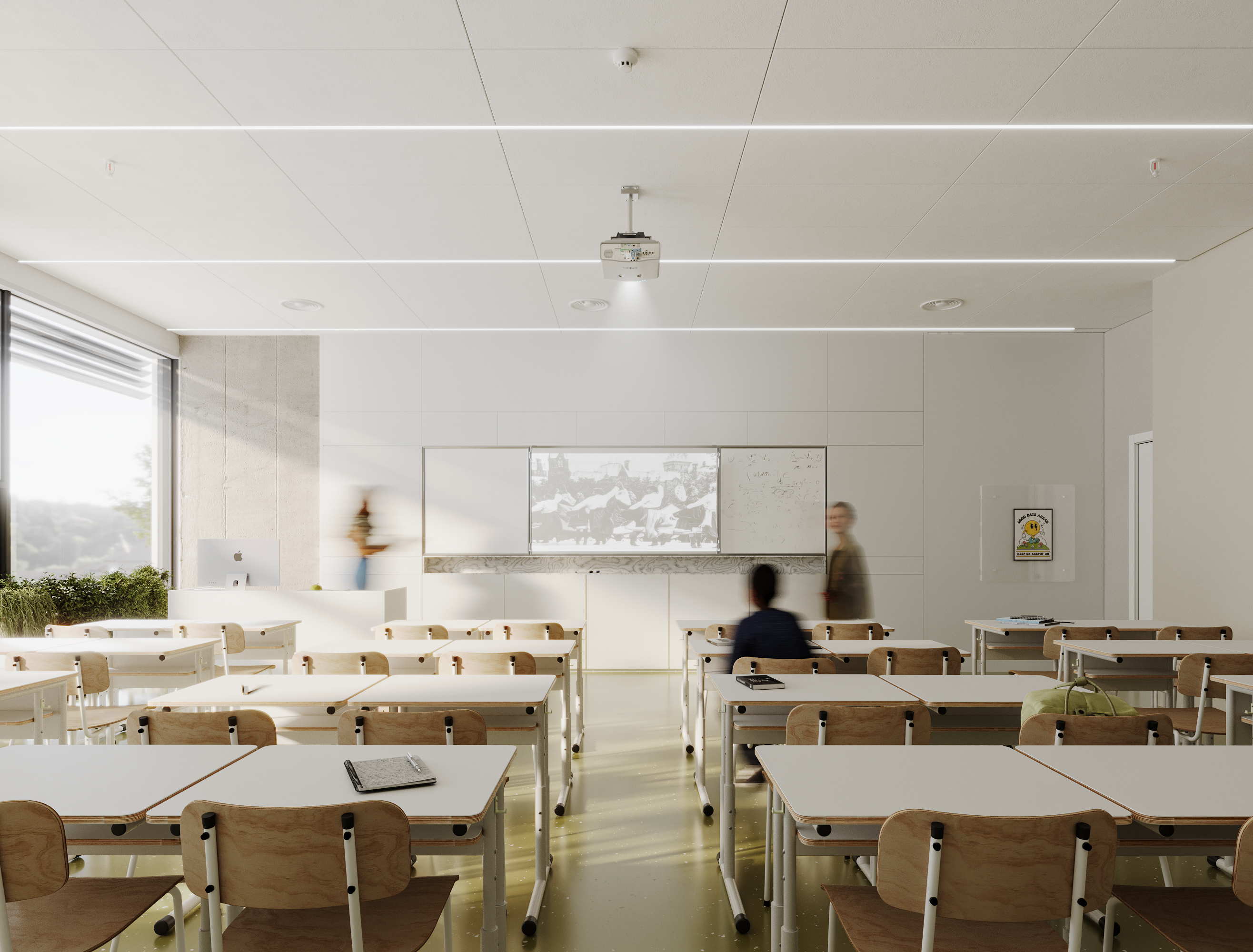
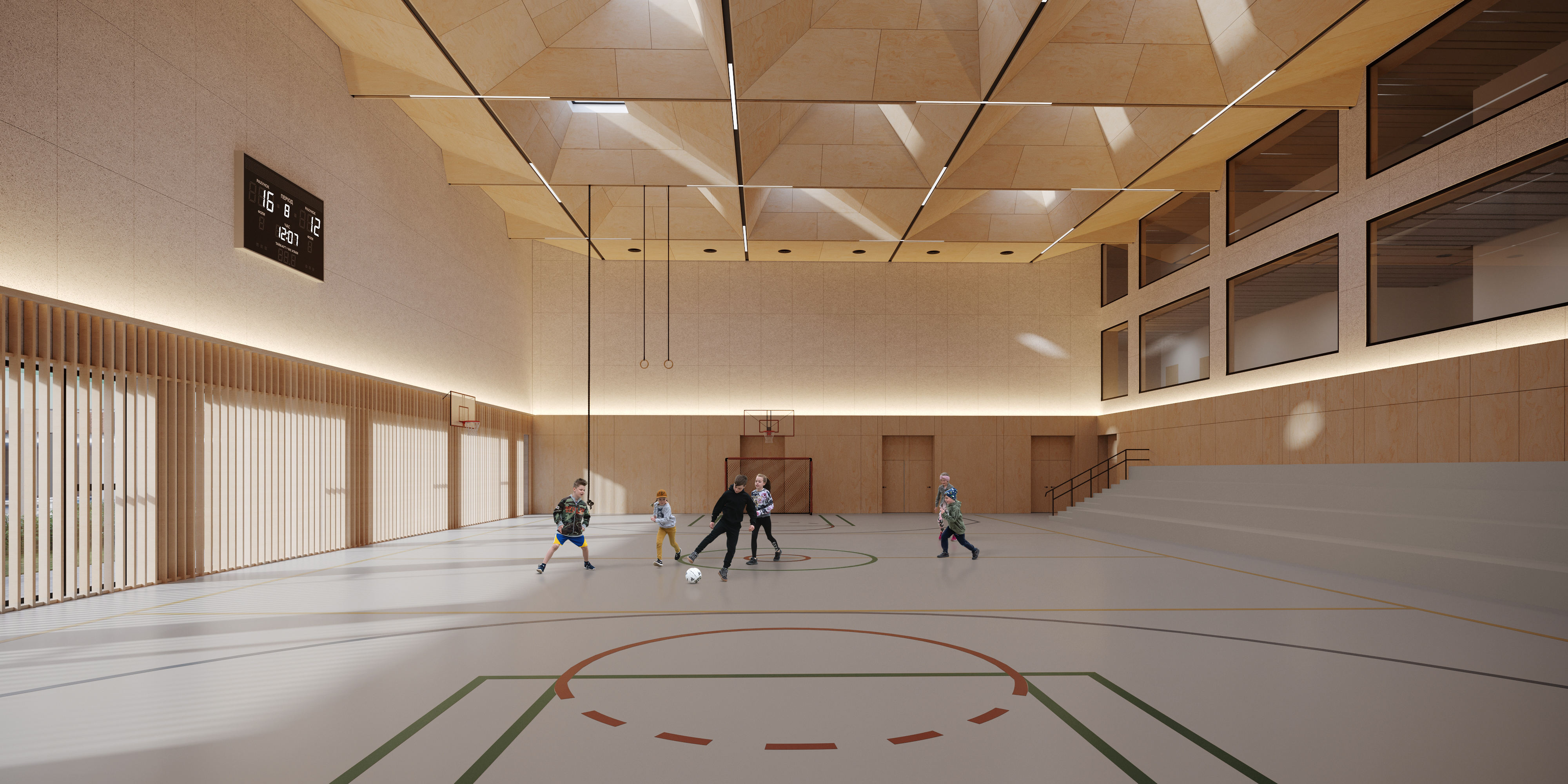
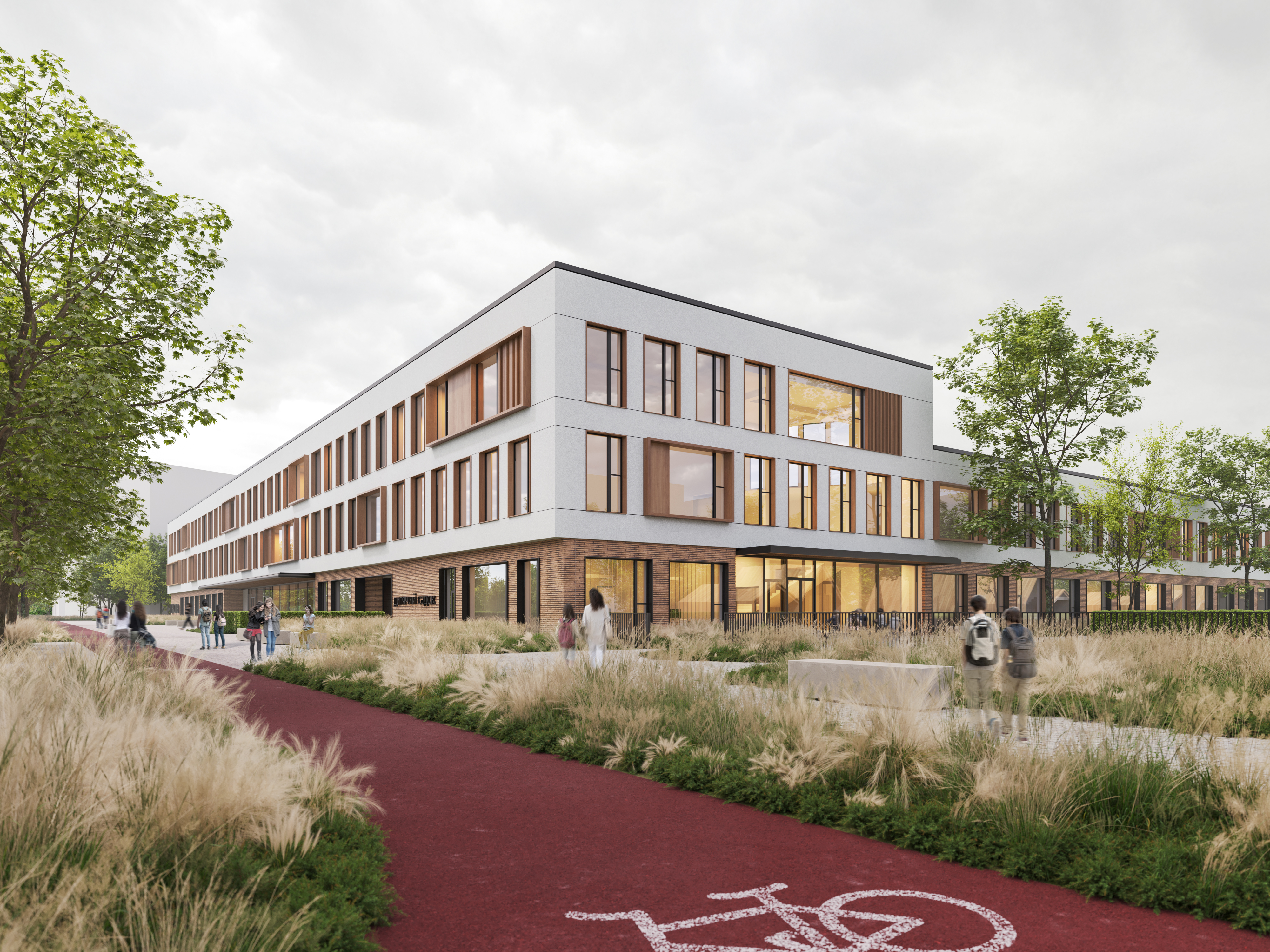
We aimed to create a space that combines safety and openness, inspiring learning, creativity, and interaction. This is not just a school; it is a place where children can grow, feel confident, and free. Such individuals will become the foundation for Ukraine's recovery and prosperity. The school will serve not only as an educational institution but also as a community hub. The building and its premises will be accessible during non-school hours for clubs, activities, and other community events. The school includes a modern shelter that can be transformed into rooms for clubs during peaceful times. Moreover, the building will achieve an energy efficiency class of A, making it cost-effective and energy-independent. Even in the event of power outages, the school will continue to operate thanks to its backup energy systems.

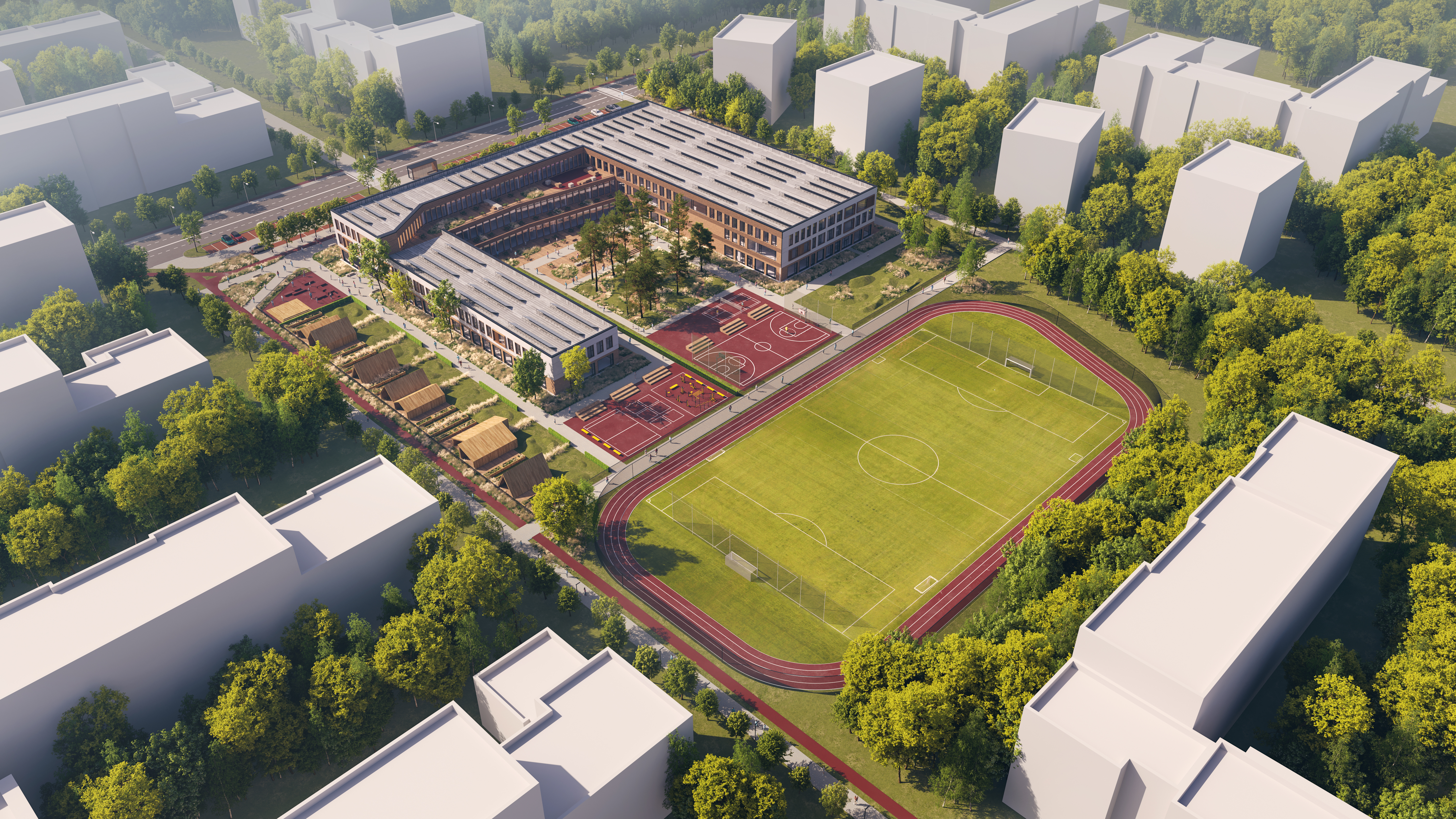
The school grounds serve as a public space that combines active and passive zones, designed to harmoniously balance quiet areas near the classrooms with spaces for active recreation. The inner courtyard is styled as a park with natural greenery characteristic of the Bucha forest. The grounds include an area for outdoor exploration and learning, gardening with "French-style beds," chess and board game tables, as well as three terraces that can be used for relaxation, celebrations, meals, or exhibitions of children's work. Additionally, the territory features modern sports fields, which can be used by the Bucha community for sports and active recreation during non-school hours.
Principles of Sustainability
The school’s sustainability principles are built on the use of clean energy and modern technologies designed to minimize environmental impact. Geothermal heating provides energy-efficient temperature control, while solar panels generate renewable energy. The school is committed to achieving zero emissions, fully eliminating any harmful effects on the ecosystem. With these advanced technologies, the Bucha school will be able to meet all its energy needs without relying on traditional energy sources. The building will meet the highest standards of energy efficiency and achieve an A-class energy efficiency rating.
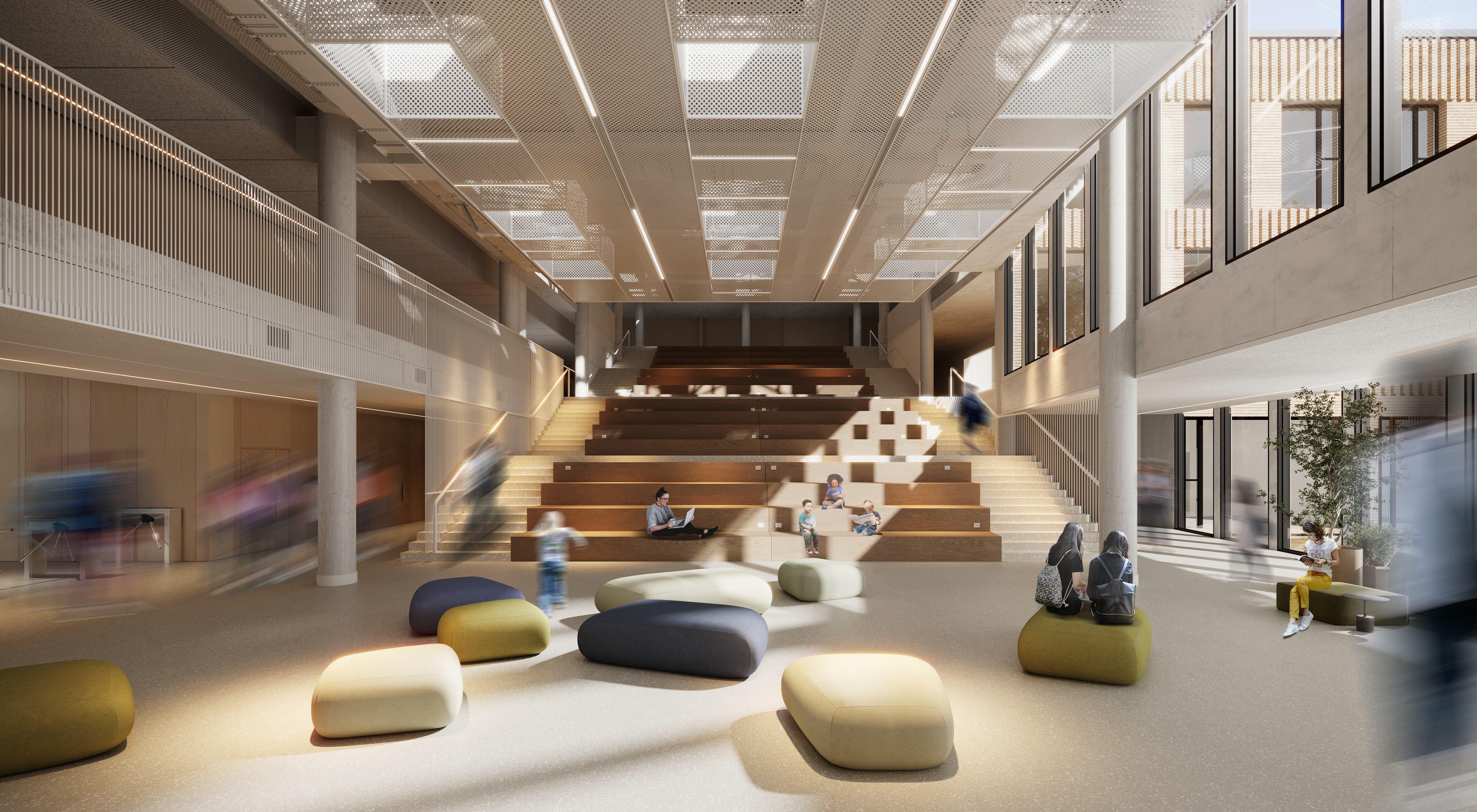
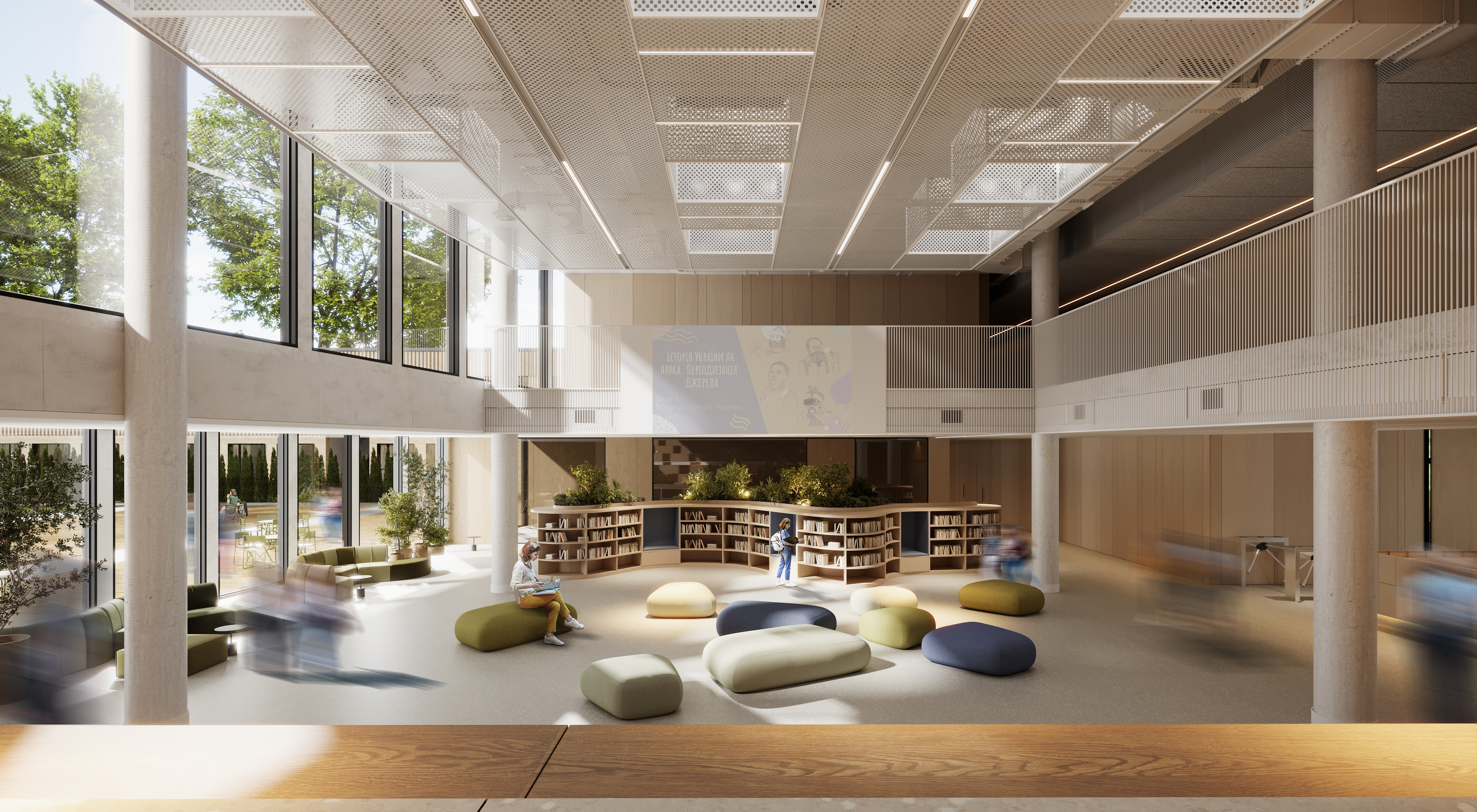
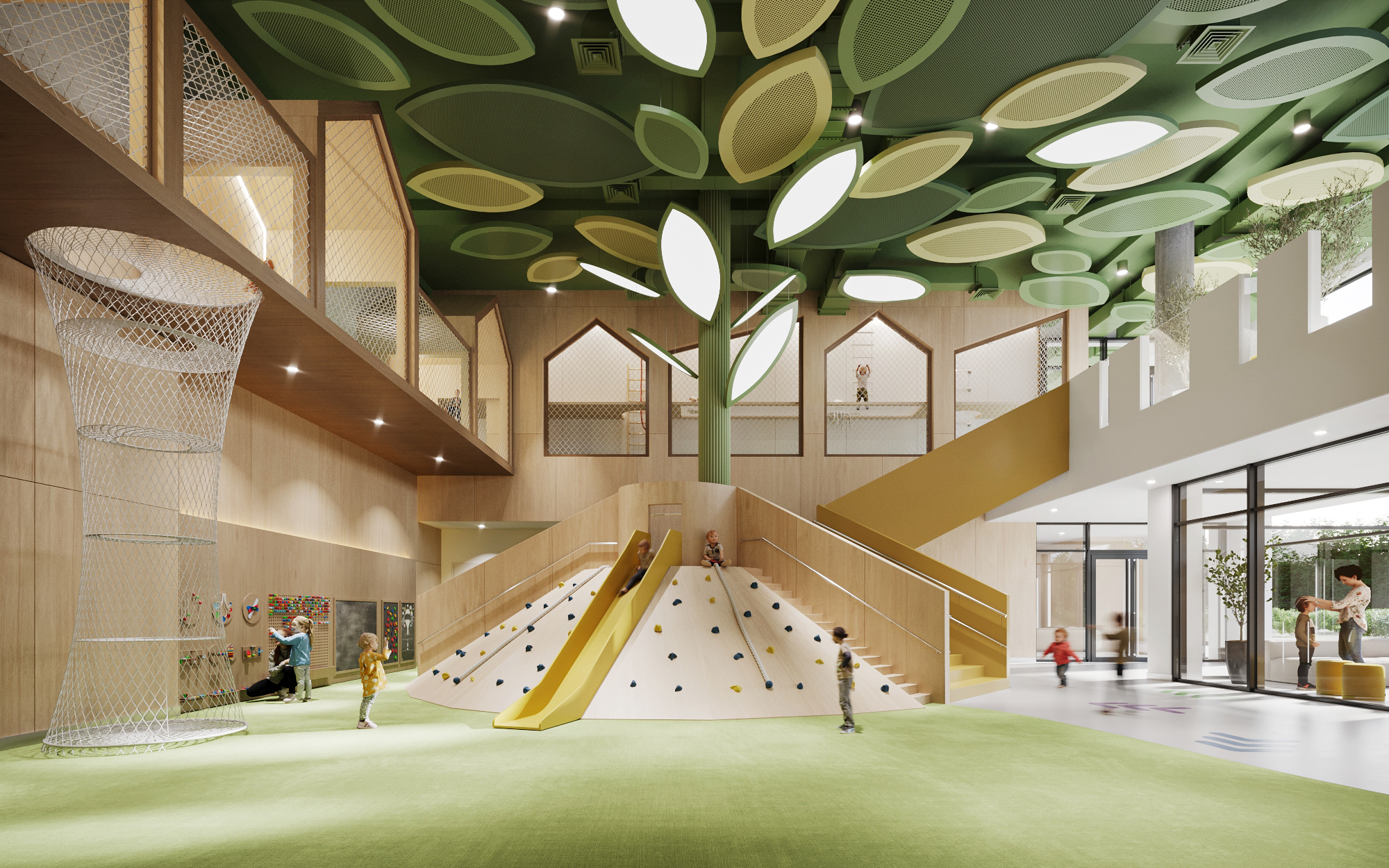
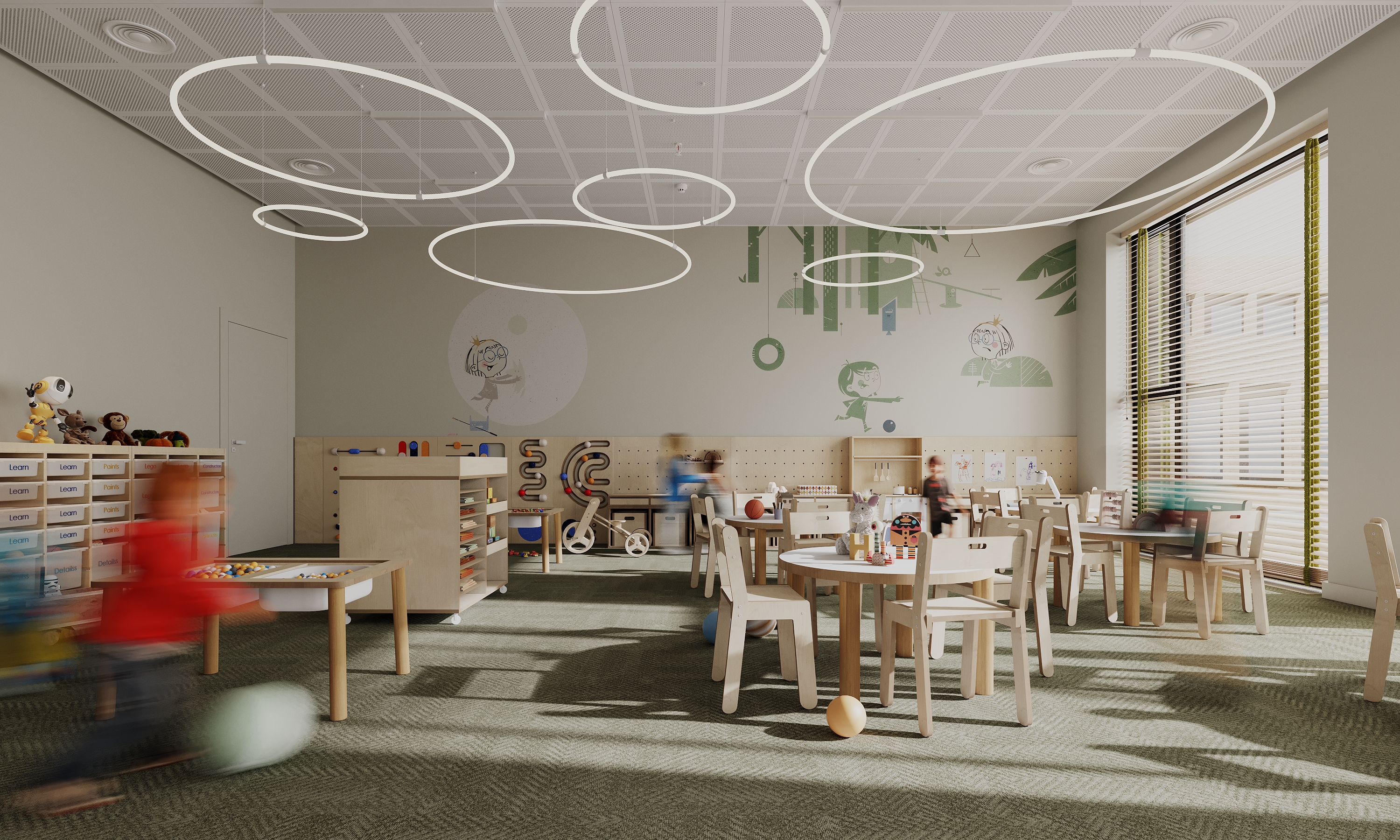
The heart of the school is its atrium — a spacious and bright hall that serves as a hub for interaction, learning, and socialization. This space allows children to participate in exhibitions, projects, fairs, and knowledge sharing. A similar atrium is featured in the kindergarten, where it functions as a large play area with dedicated zones for events, performances, and displays. The corridors have been reimagined as multifunctional spaces that inspire creativity: not just passageways between classrooms but areas designed for relaxation, individual study, and group work. The openness of these zones fosters free communication between students and teachers, creating a welcoming environment for growth. Every aspect of the design adheres to the highest standards of safety and comfort, using environmentally friendly and durable materials that can withstand heavy use. Both the school and kindergarten are fully accessible, ensuring that children of all physical abilities can actively participate in learning and school life.